Guide · November 3, 2026 · 8 min read
Hikes Near Mexico City: Waterfalls, Forest Ravines and Crater Lakes
Compare three hikes near Mexico City through the landscapes that define them, from forest waterfalls to volcanic crater lakes. Learn what to ask about difficulty, transport, equipment and altitude before choosing your trip.
What kinds of hikes can you choose near Mexico City?
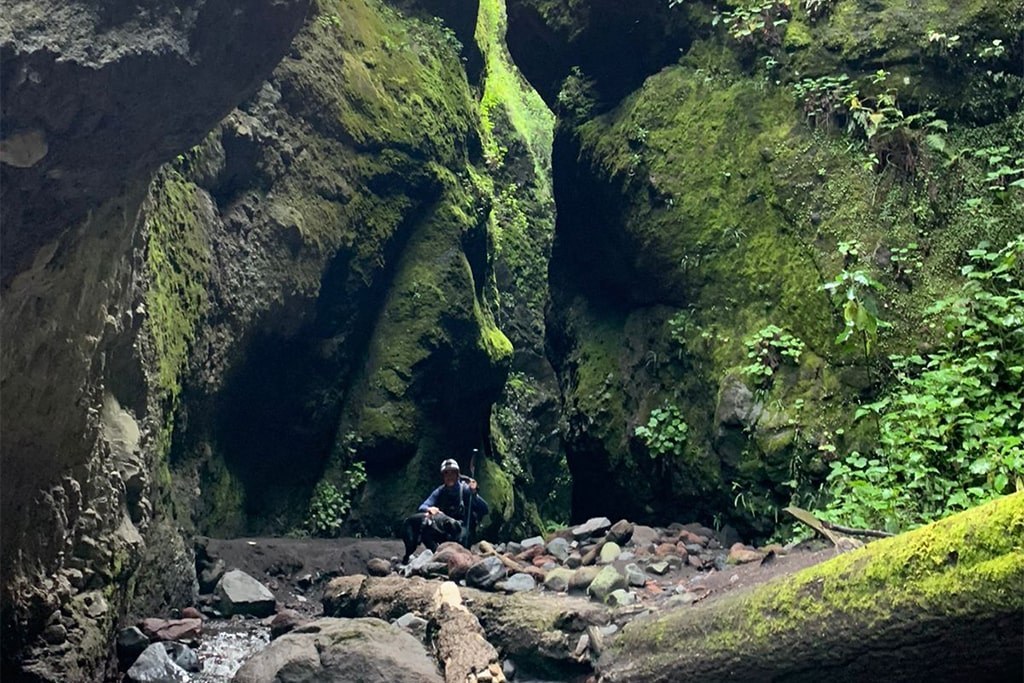
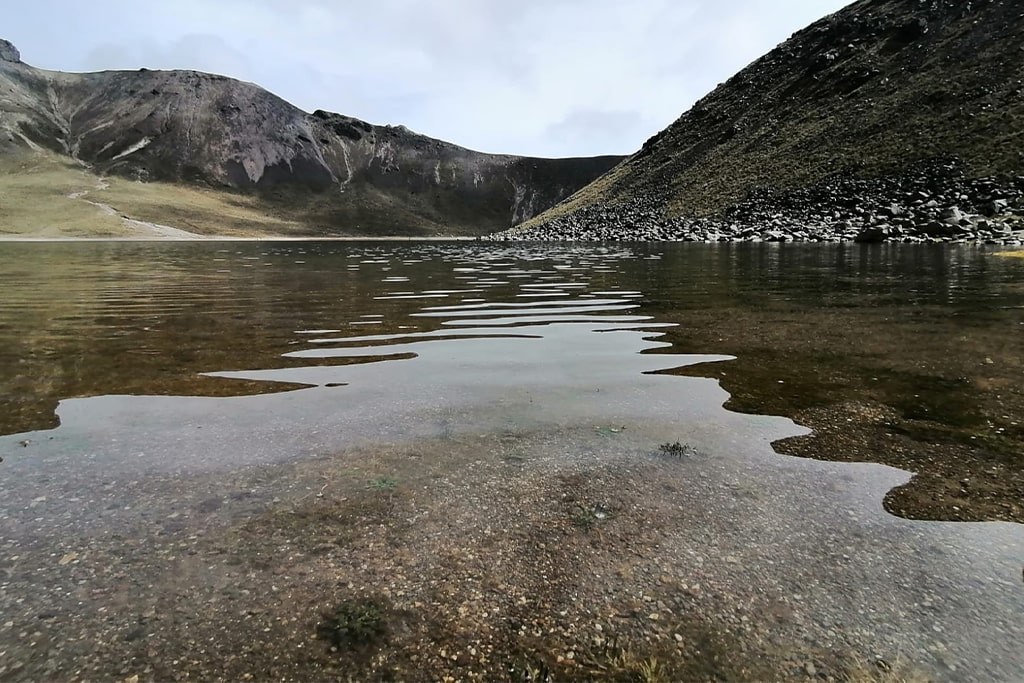
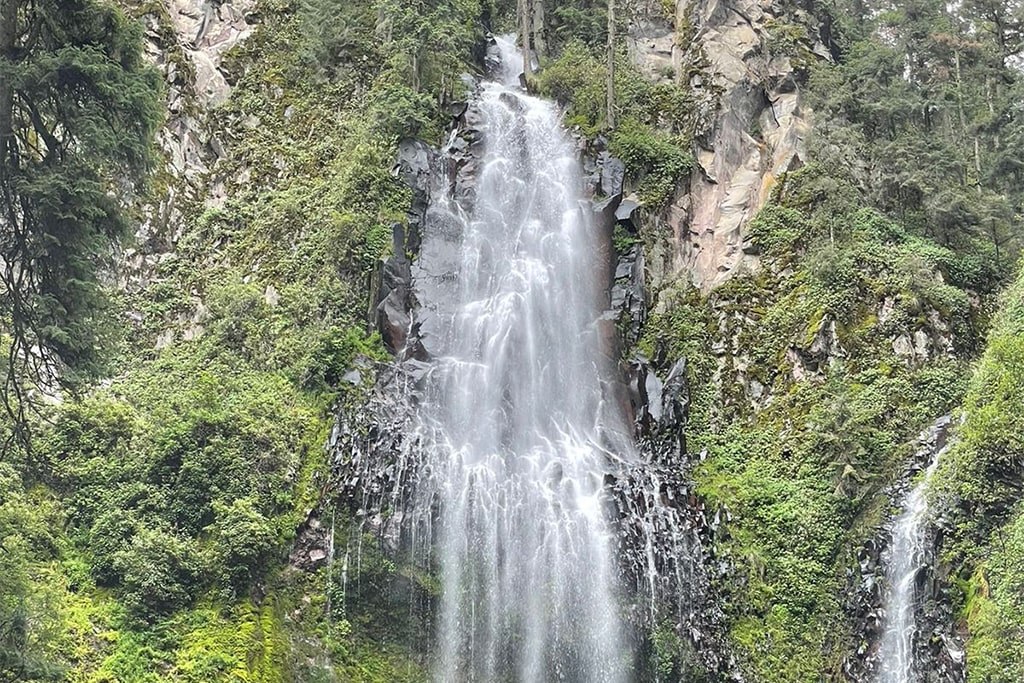
Searching for hikes near Mexico City often begins with a photograph: sunlight catching waterfall spray, a stream enclosed by forested walls, or lakes held inside a volcanic crater. Each suggests a different way of spending time on foot. Cascada de los Diamantes, Cañada Nexpayantla and Lagunas del Sol y la Luna offer those three landscape experiences in the Backpacking Mexico catalogue. Choosing among them should begin with what draws you outdoors, then move to the practical questions a photograph cannot answer. What does the proposed itinerary involve? How will you reach the meeting point? What preparation will the particular outing require?
Cascada de los Diamantes is a forest hike in Dos Aguas, on Iztaccíhuatl’s lower slopes, leading to waterfalls where sunlight catches the spray. Cañada Nexpayantla follows a stream through a green ravine between forested canyon walls on Popocatépetl’s lower slopes, in the Izta-Popo area of the State of Mexico. Lagunas del Sol y la Luna explores the lakes inside Nevado de Toluca’s volcanic crater, also in the State of Mexico. Its lake-focused route is distinct from the summit ascent. These descriptions establish the character of each trip, not a ranking by effort, travel time or suitability for a first hike.
Choose the landscape that interests you, then confirm the itinerary that fits your experience—not the other way around.
How difficult are these hikes, and which fits your experience?
The catalogue does not provide distance, duration, difficulty or maximum altitude for these three outings. That matters: there is no documented basis here for calling one easy, describing another as intermediate, or promising a short walk. A waterfall destination does not establish the effort needed to reach it, and a lake-focused itinerary should not inherit the statistics of a separate summit trip. Ask Backpacking Mexico for the details of the route being proposed, including walking distance, elevation gain, expected time on foot and the terrain involved. Treat those answers as the foundation of your choice, rather than filling the gaps with assumptions.
Give the team a useful picture of your experience instead of simply saying that you are fit. Describe your recent walks, whether you regularly hike or mostly exercise elsewhere, and how you feel about sustained effort outdoors. Mention any concerns about footing, pacing or carrying a day pack, and ask how the proposed outing would address them. If several people are joining, discuss everyone’s experience rather than planning around the strongest walker. The useful question is not which of these names sounds least demanding. It is whether the actual plan, once explained, matches the group’s preparation and expectations for the day.
How do you get there, and what transport details need checking?
The regional descriptions help orient your research, but they are not driving directions. Dos Aguas identifies the setting for Cascada de los Diamantes; the Izta-Popo area identifies Cañada Nexpayantla’s broader location; Nevado de Toluca identifies the crater setting of Lagunas del Sol y la Luna. None of these catalogue entries specifies a meeting point, road approach, public transport connection, parking arrangement or transfer duration. Before making travel plans, request the exact meeting location and ask whether transportation is included, arranged separately or left to participants. Do not assume that a guided walk automatically includes a departure from Mexico City or a return transfer.
Keep your travel plan separate from your walking plan until both have been confirmed. Ask what time participants should arrive, what the return arrangements would be, and how changes would be communicated. If you intend to drive, request instructions for the agreed meeting point rather than choosing a map result with a similar destination name. If you need another transport option, ask about it before committing to the outing. The phrase 'near Mexico City' is useful for discovering ideas, but it is not a promise of a particular journey length. Leave other commitments flexible until you understand the complete proposed schedule.
What should you bring on a guided hike?
Start with a trip-specific equipment list from Backpacking Mexico rather than treating every landscape as the same packing problem. As a general preparation checklist, discuss footwear suitable for the confirmed terrain, clothing layers, rain protection, sun protection, drinking water, food and a pack that carries them comfortably. Ask which items you must provide and whether anything is supplied. The catalogue does not identify required equipment for these three routes, so no item should be presented as a confirmed inclusion. Equally, the absence of a technical activity in a short description is not a substitute for asking what the planned itinerary requires.
Try your packing arrangement before the outing: wear the footwear you intend to use, adjust the pack and check that frequently needed items are accessible. Request guidance on water and food quantities once the duration and conditions of the specific plan are known; a universal quantity would ignore information still missing here. Bring personal medication you normally require and discuss relevant needs privately with the team in advance. For photography, choose what you can carry without letting equipment dominate the experience. At Cascada de los Diamantes, the catalogue’s image of sunlight in spray is an invitation to observe, not a promise about the light on your visit.
What should you ask about altitude and acclimatization?
Altitude requires its own conversation, especially when a destination shares a mountain name with another trip. Lagunas del Sol y la Luna is not the Nevado de Toluca summit ascent. Likewise, a hike on Iztaccíhuatl’s lower slopes is not its summit expedition. The catalogue leaves maximum altitude unspecified for all three outings discussed here, so summit elevations from other listings should not be used as substitutes. Ask for the starting elevation, highest point and elevation profile of the itinerary you are considering. Those details provide a clearer basis for discussing preparation than the general impression created by a mountain photograph or destination name.
Tell Backpacking Mexico about your previous experience at altitude and whether you have recently arrived from somewhere lower. Ask whether an acclimatization plan is recommended for your circumstances and what that plan would involve. Do not treat general fitness, a previous successful hike or the word 'lakes' as an answer to an altitude question. If you have a relevant medical condition or a history of problems at altitude, seek individualized advice from a qualified health professional before deciding. Also ask the guiding team how participants should communicate feeling unwell and how decisions about continuing or changing the outing are made.
What is the best season for these walks?
There is no documented seasonal calendar for these routes in the supplied catalogue. It would therefore be misleading to name a best month, promise waterfall conditions or guarantee clear views inside the crater. Instead, ask Backpacking Mexico how the conditions expected for your proposed outing may affect the itinerary, equipment and decision to proceed. Describe what matters most to you: observing waterfalls, walking beside a stream or exploring the crater lakes. Then ask whether those priorities fit the plan under consideration. Request an update close to departure and clarify what happens if access or weather leads the team to revise the outing.
Frequently asked questions: how do you make the final choice?
Which should you choose for your first guided hike? There is not enough difficulty information here to nominate a universal beginner option; share your experience and request a recommendation based on a confirmed itinerary. Which offers waterfalls? Cascada de los Diamantes is the waterfall-focused forest outing in this selection. Which follows a stream through a ravine? That is Cañada Nexpayantla. Which visits lakes rather than aiming for a summit? Lagunas del Sol y la Luna is explicitly described as a lake-focused crater route. Can the three be ranked by walking time or distance? Not from this catalogue, which leaves those measurements unspecified.
When you contact Backpacking Mexico, name the outing that interests you and explain why. You might ask about Cascada de los Diamantes for its forest and waterfalls, Cañada Nexpayantla for its stream and wooded canyon walls, or Lagunas del Sol y la Luna for its volcanic crater setting. Include your experience, group needs and questions about logistics so the conversation can move beyond a scenic description. The best choice is not necessarily the most dramatic photograph. It is the trip whose actual plan you understand, whose preparation you can meet, and whose landscape gives you a reason to pay attention while walking.