Guide · November 14, 2026 · 8 min read
Day Hikes from Mexico City: Forests, Waterfalls and Volcanic Terrain
Looking for day hikes from Mexico City? Explore three contrasting landscapes—Volcán Xitle, Cascada de los Diamantes and Cañada Nexpayantla—and learn what to confirm before choosing your outing.
The appeal of day hikes from Mexico City is not simply getting away. It is finding a different way to look: into a volcanic crater, toward sunlight catching waterfall spray, or along a stream enclosed by forested canyon walls. Three Backpacking Mexico trips offer those contrasting perspectives: Volcán Xitle, Cascada de los Diamantes and Cañada Nexpayantla. Treat them as a shortlist for planning, rather than interchangeable outings. Their catalogue descriptions establish the landscapes, but do not specify walking distances, elevations, difficulty ratings or durations. Before committing to a day outside the city, ask which proposed itinerary fits your experience and available time.
What kinds of hikes can you consider?
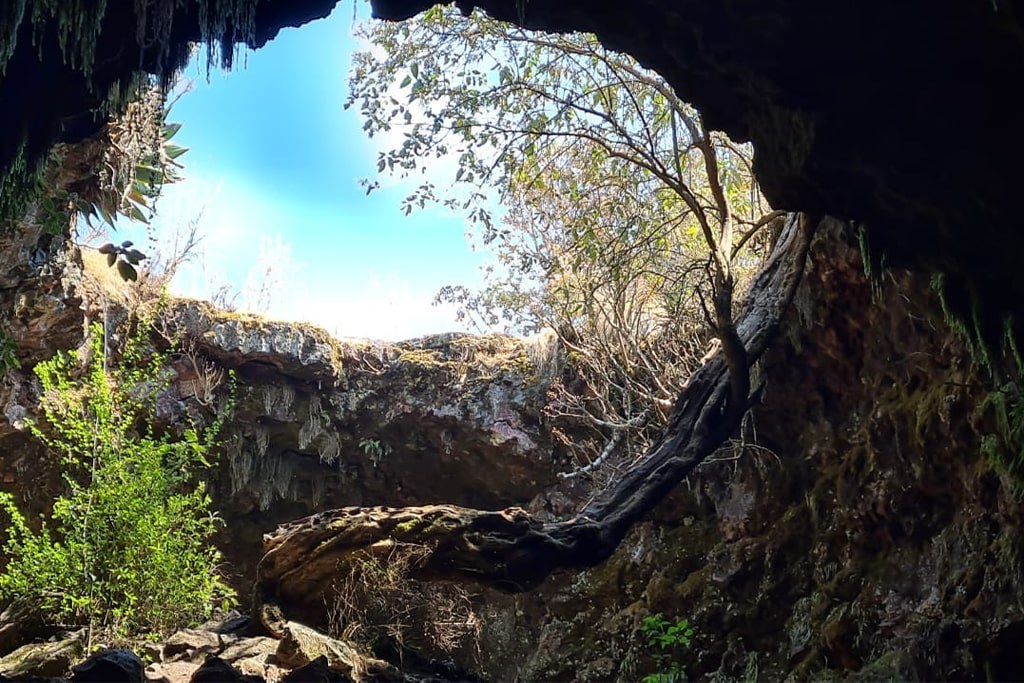
Volcán Xitle puts volcanic features at the center of the experience. In the Ajusco area, on the southern edge of Mexico City, its catalogue description combines forest trails with volcanic terrain, a crater and lava-formed caves. That combination makes it worth discussing if your curiosity runs toward the shapes a volcano leaves behind. It does not, however, establish which caves a particular departure visits or what moving through them involves. Ask Backpacking Mexico to describe the planned route and clarify whether cave exploration is included, optional or dependent on the arrangements for your outing.
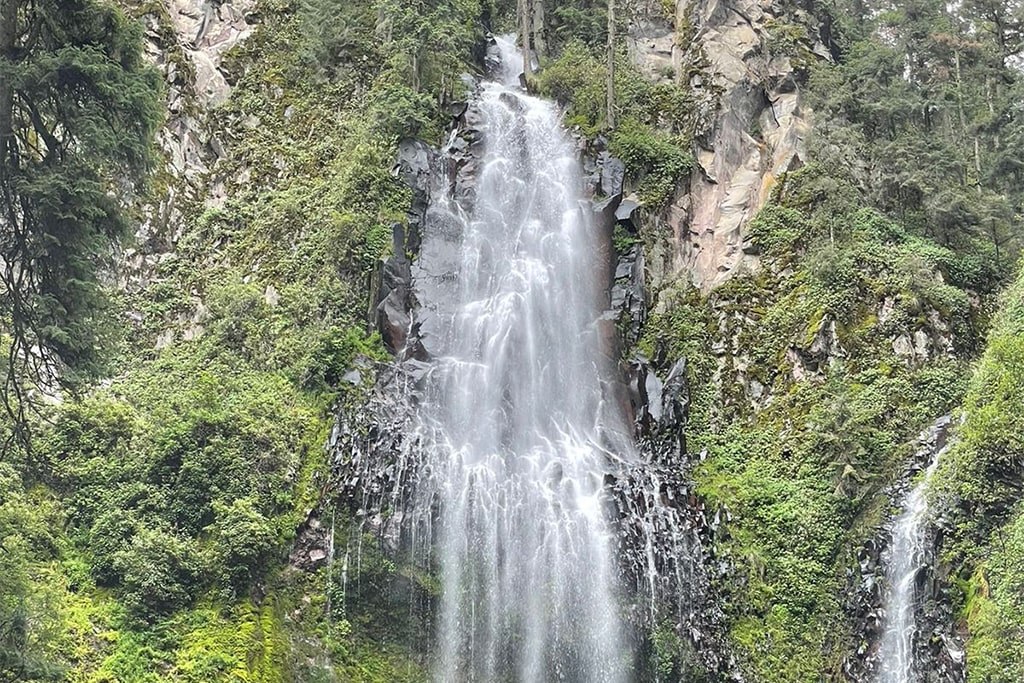
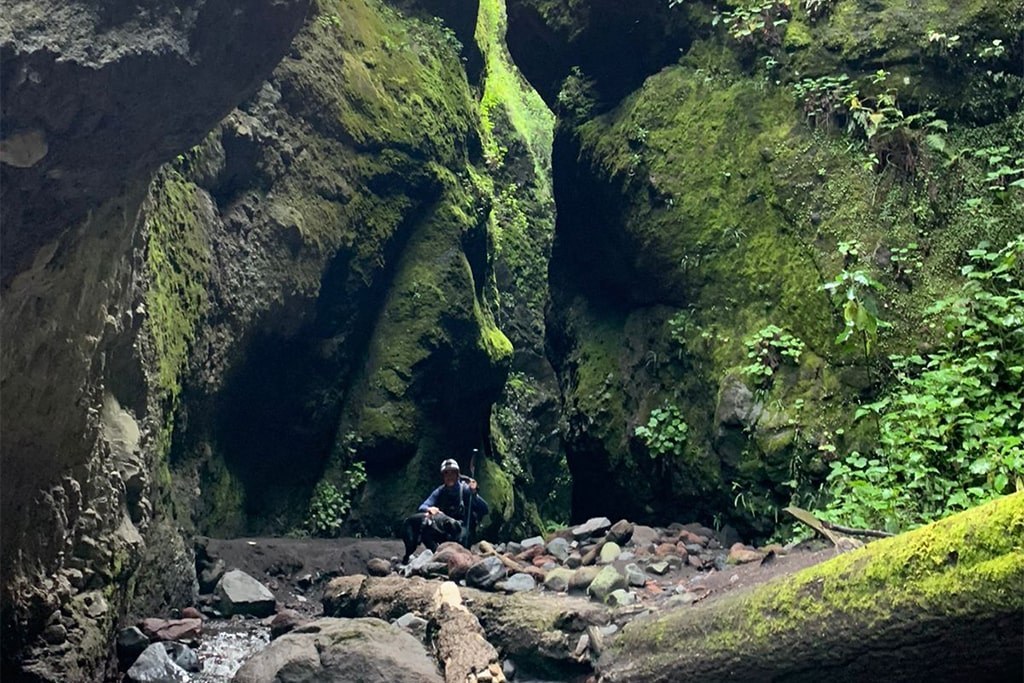
Water provides the thread for the other two choices. Cascada de los Diamantes is a forest hike in Dos Aguas, on Iztaccíhuatl’s lower slopes, leading to waterfalls where sunlight catches the spray. Cañada Nexpayantla, in the Izta-Popo area of the State of Mexico, follows a stream through a green ravine on Popocatépetl’s lower slopes, between forested canyon walls. Choose your conversation starter accordingly: waterfalls as the focus, or a ravine landscape shaped by the stream. Neither description supplies enough information to rank the walks by effort, and neither should be mistaken for an itinerary to a volcanic summit.
How hard are these hikes, and which suits you?
A beautiful description is not a difficulty rating. The catalogue gives no distance, walking duration or difficulty classification for these three trips, so labels such as easy, moderate or beginner-friendly would be guesses. Instead, ask for the proposed distance, total ascent and descent, expected walking time and character of the footing. Ask whether the outing includes any sections that require using your hands, entering confined spaces or negotiating water. These are questions to resolve, not features to assume. A useful answer explains the whole day’s demands rather than reducing a varied walk to a single reassuring adjective.
Give the guide something concrete to work with. Describe a recent walk you completed, how you felt afterward, and any concerns about balance, sustained climbing or enclosed spaces. If you are organizing a group, share the range of experience rather than only the strongest walker’s achievements. For Xitle, clarify the demands of any planned cave visit; for Diamantes and Nexpayantla, ask about the actual walking surface and any water-related obstacles on the proposed route. Then discuss pace, breaks and the process for changing plans. Choosing well means matching the outing to the people, not persuading everyone to fit an attractive photograph.
Choose the landscape that draws you in, then choose an itinerary that fits the walker you are today.
How do you get there and organize the day?
Start with the locations the catalogue actually provides: the Ajusco area of Mexico City for Volcán Xitle; Dos Aguas on Iztaccíhuatl’s lower slopes for Cascada de los Diamantes; and the Izta-Popo area of the State of Mexico for Cañada Nexpayantla. Those are geographical anchors, not transport instructions. The listings do not identify meeting points, trailhead access, public transport connections, driving times or parking arrangements. Ask Backpacking Mexico where your proposed outing begins and ends, whether transfers are included, and what you would need to organize independently. Do not assume that a trip discussed as an escape from the city includes collection from your accommodation.
For a day trip, the essential number is the full time away, not just hours spent walking. Request an outline that separates the meeting time, transfers, trail time, breaks and expected return. Because the catalogue does not state durations for these three routes, confirm explicitly that the proposed plan works as a same-day outing from your starting point. Mention any fixed evening commitment before choosing. Also ask how changes to access or conditions would be communicated and what happens if the original plan cannot proceed. Clear arrangements leave more attention for the landscape and less for watching the clock.
What should you bring?
Build your packing list around the confirmed itinerary, not around a generic mountain photograph. As a starting point, discuss comfortable walking footwear with suitable grip, adaptable layers, weather protection, sun protection, drinking water and food. Ask the guide to recommend quantities and clothing for the expected effort and forecast rather than borrowing someone else’s list unchanged. Carry personal medication you normally need, and raise relevant health or mobility concerns beforehand. The catalogue does not specify equipment provisions, so clarify what Backpacking Mexico supplies and what remains your responsibility. A guided booking should never be treated as an implied promise that every item is included.
Let the distinctive features shape your follow-up questions. If a Volcán Xitle itinerary includes entering lava-formed caves, ask whether lighting or other equipment is required and who provides it. For Cascada de los Diamantes and Cañada Nexpayantla, ask whether the proposed route involves getting footwear or belongings wet; the presence of waterfalls or a stream alone does not answer that question. Keep essential items accessible and protect anything you do not want exposed to moisture. Finally, ask what to leave behind. Packing thoughtfully is less about accumulating gear than making sure each item serves the outing you have actually agreed to.
What about altitude and acclimatization?
Altitude deserves its own conversation, especially when the names of major volcanoes appear in the scenery. These three listings do not provide starting elevations or maximum altitudes. The description of a walk on lower slopes does not establish its elevation, and a nearby summit’s height should not be substituted for the height of your route. Ask for the starting point, highest point and elevation gain of the proposed itinerary. Those figures answer different questions: where you begin, how high you go and how much climbing is involved. Without them, a confident comparison of altitude exposure would be premature.
Tell Backpacking Mexico whether you have just arrived, what elevations you are accustomed to and how you have responded to previous hikes at altitude. Do not assume that regular exercise alone settles the question of readiness. Ask whether your circumstances call for a different itinerary or additional acclimatization before this outing. If you have a relevant medical condition or a history of altitude-related illness, seek individualized advice from a qualified healthcare professional. During the walk, communicate any new symptoms promptly rather than treating silence as determination. The goal is a well-matched day outside, not completing a chosen route regardless of how you feel.
When is the best season to go?
There is no supported month-by-month ranking in these catalogue entries. They do not give operating seasons, seasonal access patterns or a calendar for waterfall conditions, so naming a universal best month would add information the listings do not contain. Instead, describe the experience you want and ask how the current conditions affect the proposed route. For Diamantes, you might ask about the expected waterfall experience; for Nexpayantla, about conditions along the stream; for Xitle, about the planned volcanic-terrain and cave components. Treat the answers as planning information for your outing, not a promise that every visit looks the same.
Separate the broad question of season from the immediate question of whether a particular plan should go ahead. Ask when the forecast and access arrangements will be checked, who makes any itinerary changes and how you will hear about them. Keep some flexibility in your expectations: sunlight catching spray is part of the description of Cascada de los Diamantes, not a guaranteed photographic appointment. The same principle applies to any landscape-driven trip. You can select a setting that excites you while accepting that conditions influence the experience. Confirm the practical plan close to departure rather than relying only on an appealing description.
Frequently asked questions before booking
Which option is best for a first hike? The catalogue does not establish that; ask for a route assessment based on your experience. Can children join? Discuss their ages, previous walking experience and the specific itinerary instead of assuming family suitability. Are these summit climbs? Diamantes and Nexpayantla are described on lower volcanic slopes, while Xitle centers on forest trails and volcanic features; none of those descriptions establishes a major-volcano summit objective. Can you visit all three in one day? The catalogue provides no basis for that plan. Start by choosing one landscape and confirming a workable outing rather than stacking destinations.
What should you ask when you first contact Backpacking Mexico? Name the trip that interests you—Volcán Xitle, Cascada de los Diamantes or Cañada Nexpayantla—and explain your available day, starting point, group size and walking experience. Request the itinerary, physical demands, elevations, transport arrangements, inclusions and current booking terms together, so you can evaluate the complete proposal. None of those details should be inferred from the scenery alone. The reward for this preparation is a more deliberate choice: volcanic forms, waterfall spray or a stream threading a green ravine, experienced through a plan built around your actual needs.