Guide · October 31, 2026 · 7 min read
Nevado de Toluca Today: What to Check Before Your Hike
Planning to hike Nevado de Toluca today? Separate current access and weather questions from the lasting essentials: choosing your objective, preparing for altitude, and confirming your plan with Backpacking Mexico.
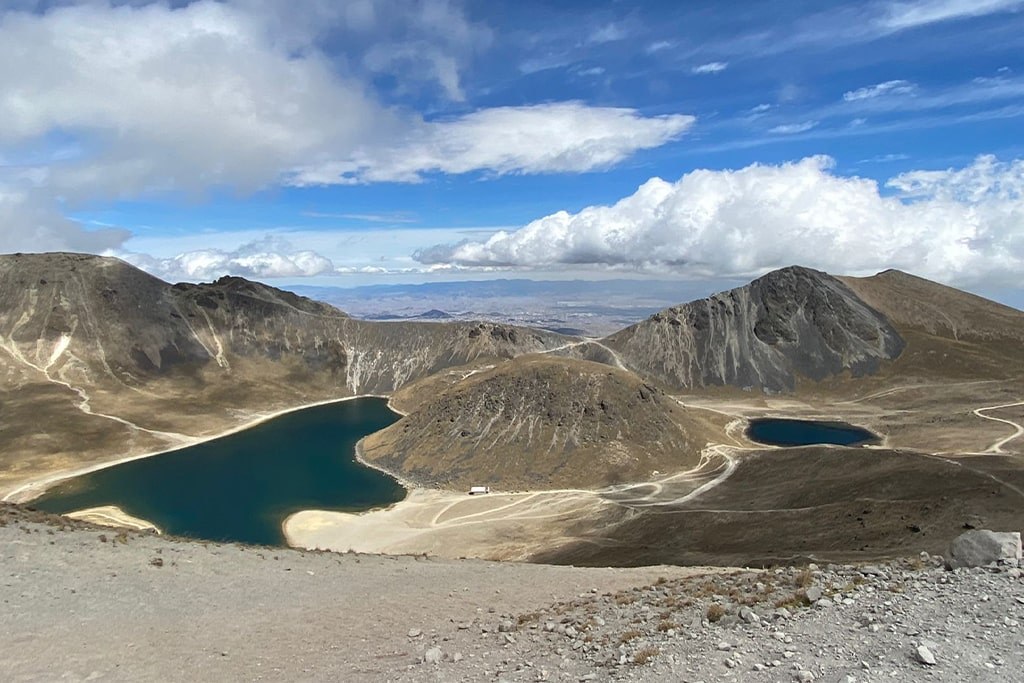
A search for “Nevado de Toluca today” often begins with a simple wish: leave the screen behind and spend a day in the mountains. The landscape gives that wish a clear shape—crater rims, the Sun and Moon lagoons, and a summit objective in the State of Mexico. But a compelling destination is not the same thing as a confirmed departure plan. This evergreen guide does not provide live weather, access status, or trip availability. Instead, it helps you identify what needs checking now, understand what the catalogue actually describes, and ask Backpacking Mexico the questions that matter before committing to the hike.
What is Nevado de Toluca, and which hike are you planning?
The catalogue describes Nevado de Toluca Summit as a high-altitude day out among crater rims and the Sun and Moon lagoons. Its listed maximum altitude is 4,680 metres, and its region is the State of Mexico. Those details establish the setting and the scale of the objective, but they do not provide a complete itinerary. They do not tell you the precise sequence of the walk, where transport ends, or how much time is spent at each location. Treat the description as an introduction to the mountain experience, then request the proposed itinerary rather than filling its gaps with assumptions.
Start by deciding what draws you here. Is it the prospect of a summit, the crater landscape, or time spent looking toward the lagoons? Those interests can overlap, but they should not be treated as interchangeable hiking objectives. The catalogue distinguishes a lake-focused route from the summit ascent; a photograph of the water therefore does not identify the outing behind it. For the linked Nevado de Toluca Summit trip, ask Backpacking Mexico to explain the intended objective and how the proposed walk relates to the crater and lagoons. That conversation gives everyone a shared understanding of what you hope to do.
How difficult is the hike, and how long does it take?
The most useful answer begins with a limit: the catalogue does not publish a distance, a formal difficulty rating, or an exact duration for Nevado de Toluca Summit. Its description as a day out should not be converted into a promised number of walking hours. Likewise, the listed altitude is not a substitute for an assessment of the proposed route. Avoid borrowing measurements from an unrelated online track simply because it carries the same mountain name. Ask for the expected walking distance, elevation gain, terrain description, and schedule for the specific outing under discussion, with any uncertainty made explicit before you book.
When you ask whether the outing suits you, offer more than a general statement that you are fit. Describe recent walks, how you felt during them, what you carried, and any previous experience at altitude. Explain whether your main interest is reaching a summit or spending time in the mountain landscape. These details make a suitability conversation more useful than a simple beginner-versus-expert label. Ask Backpacking Mexico how the group pace is considered, what circumstances could change the objective, and how a decision to turn around would be handled. The purpose is clarity, not a promise that the summit will be reached.
The first step toward the summit is not on the trail; it is making sure the plan matches the mountain, the day, and you.
How do you get there, and what access information needs checking?
The catalogue locates the trip in the State of Mexico but does not specify a departure point, driving route, transport service, parking arrangement, or trailhead. For that reason, this guide cannot responsibly supply turn-by-turn directions or an assumed transfer time. Ask Backpacking Mexico where the proposed outing begins and ends, whether transport is included or separately arranged, and what you must organize yourself. Request a clear meeting point rather than relying on the destination name alone. If you plan to travel independently, confirm that your arrival arrangements match the actual meeting instructions before making commitments that would be difficult to change.
The word “today” changes the task from inspiration to verification. Check current access information with the relevant official source, then ask the organizer whether the proposed outing is operating under those conditions. Look for the publication date and the period covered by any notice; an undated screenshot cannot establish present access. Keep separate questions separate: whether an area is accessible, whether a particular trip is running, and whether your transport arrangements work are not the same issue. Before leaving, request a final update and a contact method for changes. Nothing in the catalogue confirms that access or a guided departure is available today.
What should you bring?
Use a general packing list as the beginning of a conversation, not as the final equipment specification. Ask about clothing layers, protection from wind and precipitation, footwear, sun protection, drinking water, food, and a pack suited to the proposed outing. Explain what you already own so the team can identify any gaps without encouraging unnecessary purchases. The catalogue does not provide a required kit list or say that specialist equipment is included. Do not infer either from the word summit. Request written guidance for the actual itinerary and expected conditions, including what participants must bring and what, if anything, the organizer supplies.
Preparation also means knowing how your belongings work together. Try packing your bag before departure, check the fit of your footwear, and make frequently needed items easy to reach. Ask how water and food should be planned rather than assuming they can be obtained along the walk; the catalogue identifies no such services. Keep meeting instructions and contact details available without depending entirely on a live internet connection. Leave room to carry your own waste back out. These are practical planning habits, not claims about facilities or conditions on this mountain, and they should complement the specific instructions you receive from the organizer.
What does the altitude mean for preparation and acclimatization?
The published maximum altitude for Nevado de Toluca Summit is 4,680 metres. Read that figure carefully: it is not the starting altitude, the elevation gain, or a guarantee that every outing reaches that point. None of those additional details is supplied in the catalogue. Ask how altitude figures into the proposed plan and what preparation the organizer expects from participants. Share where you will be arriving from, your recent experience at altitude, and any concerns you already have. A useful briefing connects the stated objective with your circumstances instead of treating a single altitude number as a complete description of the day.
Acclimatization deserves its own discussion rather than a quick reassurance based on fitness. Ask Backpacking Mexico what approach they recommend for your circumstances and whether your travel plans leave room for that preparation. This guide does not prescribe an acclimatization schedule or a medical strategy. If you have a health condition, take medication, or have previously felt unwell at altitude, seek individualized advice from a qualified clinician before committing. Also ask the organizer how participants should report feeling unwell and how the group would respond. Keep the focus on honest communication and willingness to change the objective, not on proving that you can push through.
What is the best season, and what is the weather today?
The catalogue does not identify a best season, preferred months, or a weather pattern for this hike. It also provides no current forecast. An evergreen guide therefore should not promise clear views, snow, or suitable conditions at a particular time of year. For a proposed outing, consult a current forecast relevant to the destination and ask Backpacking Mexico how it affects the plan. Pay attention to when the forecast was issued and which period it covers. A broad seasonal recommendation, even when offered by an informed source, answers a different question from whether the specific outing you are considering can proceed.
Rather than searching for a universally perfect date, define what matters to you and what flexibility you have. Perhaps the crater landscape is the main attraction; perhaps the summit objective is central to the trip. Tell the organizer which expectations are essential and ask what changes would make the outing unsuitable for those expectations. Request the applicable terms for a changed or cancelled plan without assuming a particular policy exists. Then revisit the current information before departure. The most useful answer to “today” is a recently checked plan with clearly stated limits—not a scenic photograph or a confident claim detached from its source.
Frequently asked questions: can you go today, and what happens next?
Is it open today? This guide cannot confirm live access. Is a trip available? Ask Backpacking Mexico directly. How much does it cost? The catalogue supplies no price. Can a beginner join? There is no published difficulty rating, so request an individual suitability discussion. Does the summit outing mean the same thing as a lagoon visit? No: the catalogue distinguishes those objectives. Your next step is simple: ask Backpacking Mexico about Nevado de Toluca Summit, explain your experience and intended travel plans, and request current operating information alongside the proposed itinerary. Let the crater and lagoons inspire the journey; let verified details determine the departure.