Story · October 16, 2026 · 7 min read
Sunrise at the Top of Mexico: A Pico de Orizaba Expedition
A 01:00 wake-up at Piedra Grande, a rope team on the Jamapa glacier and first light at 5,636 meters.
James had climbed La Malinche and Iztaccíhuatl in the previous ten days, and his body knew the routine: a long drive, thinner air, an early night. But nothing about the Piedra Grande refuge felt routine. At 4,260 meters on the north flank of Citlaltépetl, the stone hut sat beneath a cone of snow so large and so close it filled the window like a wall.
The day had started at six in Mexico City and run east to Tlachichuca, a farming town where the group ate the last hot breakfast they would have at low altitude before climbing into a 4x4 for the jarring ride up the mountain. In the afternoon their guide fitted crampons to every boot, sized harnesses and placed an ice axe in each climber’s hand. ‘Tomorrow,’ he said, ‘you’ll become a mountaineer. Tonight you just have to rest.’
01:00
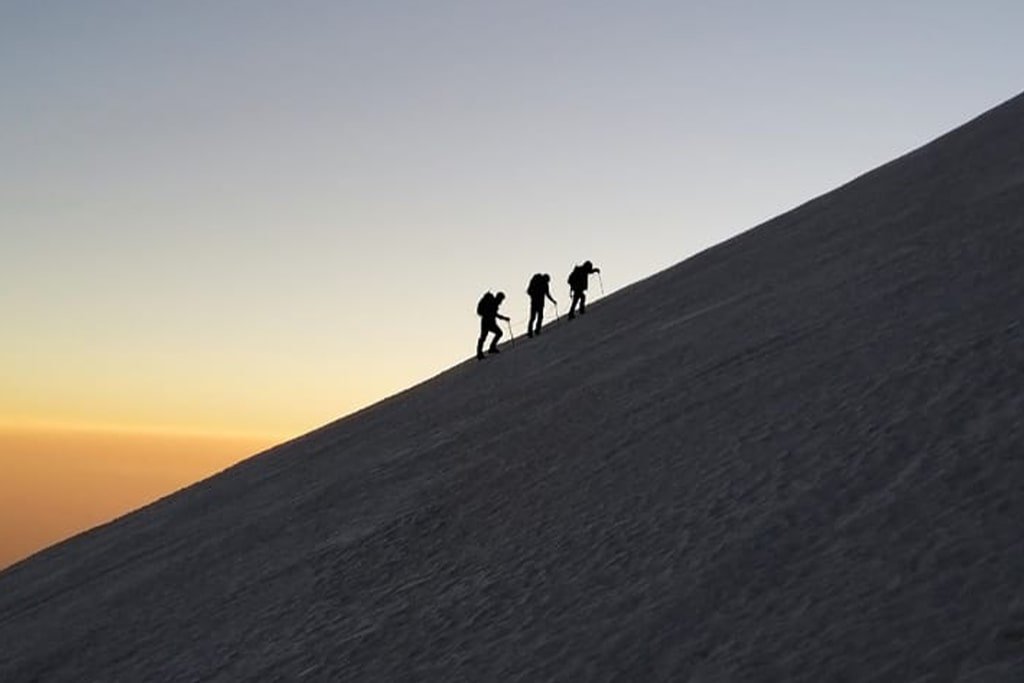
Lights out was at seven. The wake-up came at one. Outside, the thermometer read five below zero and the stars were so dense they looked like frost on glass. James ate what he could, drank more than he wanted, and put on every layer he owned. They roped up beside the refuge: two climbers to one guide, a bright line of cord linking them in the dark.
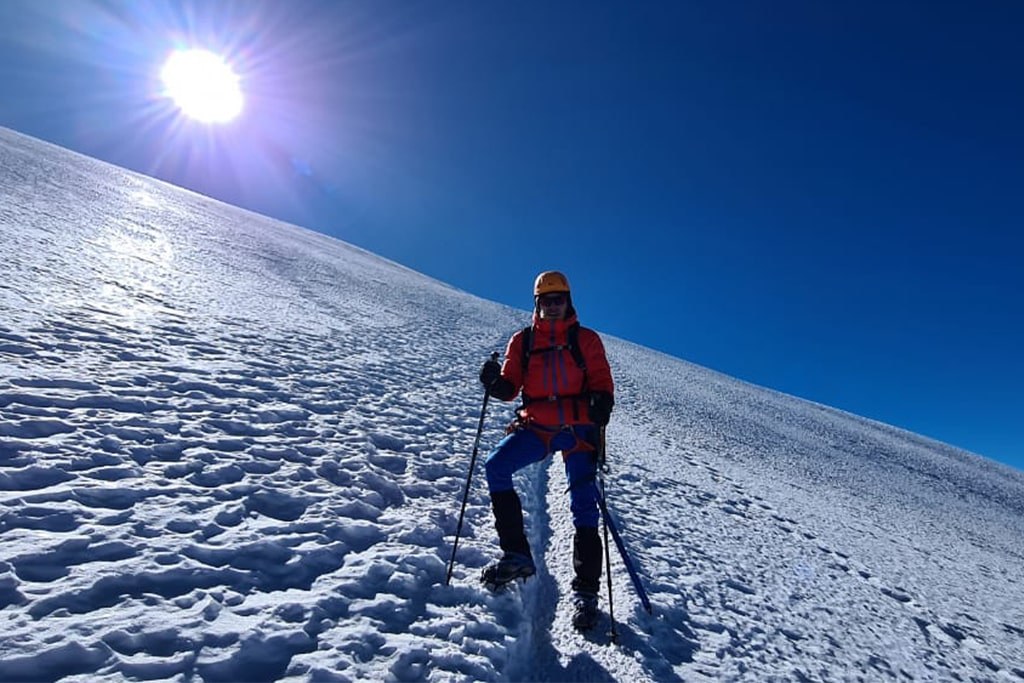
At about 4,800 meters the rock ended and the Jamapa glacier began. Crampons bit with a satisfying crunch. ‘Flat feet, small steps, axe uphill,’ the guide repeated, and James found a rhythm: step, breathe, step, breathe, the rope swinging gently between him and the guide ahead.
The hardest hour
Around 5,400 meters the slope steepened and the cold sharpened to something closer to ten below. The wind arrived with the first pale light. Every breath felt like half a breath. James stopped thinking about the summit and thought only about the next ten steps, then the next ten. Below, the glacier fell away into blue shadow; behind them, the curve of the earth was beginning to show along the horizon.
“The cold is sharp, the air is relentless,” the guide said at a pause, “but the route is fair. Keep moving and it will let you through.”
At ten to seven they reached the crater rim. The sun broke the horizon at almost the same moment, and the shadow of the mountain — a perfect triangle — stretched west across a sea of cloud toward Iztaccíhuatl and Popocatépetl, tiny now, far away. At 5,636 meters James was standing on the highest point in Mexico and the third-highest in North America. They had fifteen minutes. He spent most of them silent.
Coming down
The descent was faster, and in some ways harder: softening snow, tired legs, the need to stay focused when the adrenaline was gone. By eleven they were back at Piedra Grande, by three eating a celebration lunch in Tlachichuca, and by half past seven James was back in Mexico City with sunburned cheeks and a phone full of photos that didn’t come close.
Asked later what made the difference, he didn’t mention fitness first. He mentioned the boots and gloves he’d invested in, the two warm-up peaks, and the guide who turned two other climbers around below the steep section because they were too cold — a decision that, he says, made him trust every other decision that day.
The hikers in our stories are composite characters, but every route detail, time and condition comes from the real trails we guide.