PICO DE ORIZABA NATIONAL PARK · PUEBLA / VERACRUZ
Pico de Orizaba Summit
Mexico’s highest point. 5,636 m.
A two-day reference route toward Mexico’s highest mountain: high altitude, cold and potential glacier terrain. Technical experience, equipment, route and acclimatization are reviewed before booking; a sunrise summit is not guaranteed.
Advanced · glacier
- Duration
- 2 days · reference
- Distance
- 8 km RT
- Elevation gain
- ≈1,376 m
- Summit altitude
- 5,636 m
Reference route measurements · access and conditions vary · Summit push from Piedra Grande refuge (4,260 m) at 01:00
Overview
The mountain that turns hikers into mountaineers.
Citlaltépetl combines high altitude with cold and terrain that may include snow, ice and glacier. The reference Jamapa route requires technical skills and equipment assessed against current conditions. Training and supervision must be agreed before booking, not assumed on the mountain.
- Stand on the highest point in Mexico and the third-highest in North America
- Explore a high-mountain landscape with an agreed technical plan
- Watch sunrise light the snow from the crater rim
The summit is an objective, never a guarantee. Wind, cold, snow conditions and acclimatization decide how far the team can safely go.
The route
From the refuge to the crater rim.
Reference two-day approach via Tlachichuca and Piedra Grande toward Jamapa. Transfers, refuge access, overnight arrangements and technical preparation require an agreed proposal; summit timing is illustrative.
DAY 01 · TO THE REFUGE
Tlachichuca & Piedra Grande
Tlachichuca and Piedra Grande (about 4,260 m) are reference approach points. Vehicle access, refuge space, meals and equipment arrangements are reviewed for your dates. Technical skills and equipment compatibility must be assessed before the ascent.
DAY 02 · SUMMIT PUSH
Onto the Jamapa glacier
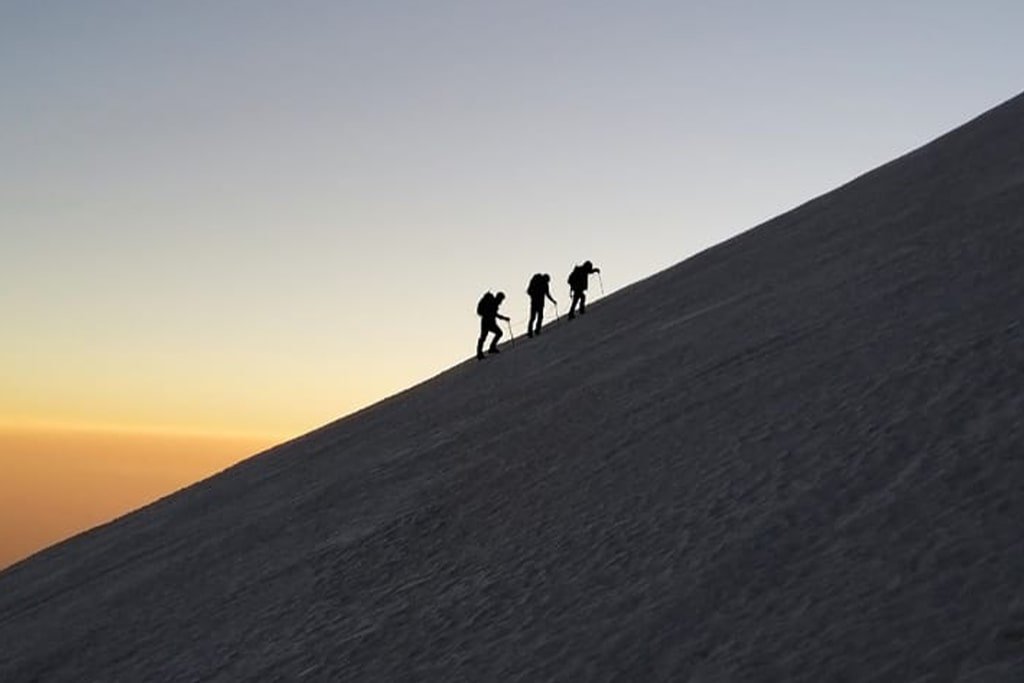
Wake at 01:00, rope up and step onto the glacier at ≈4,800 m by headlamp. The steep upper slope around 5,400 m is the hardest hour; the crater rim at 5,636 m usually arrives with the sunrise.
DESCENT · RETURN
Back down to Mexico City
Descend carefully toward the agreed base. Keep reserves for the return; recovery stops, transport and the final meeting point depend on your proposal and actual conditions.
Preparation
Train for it. Acclimatize for it.
Endurance, acclimatization and technical skills need an individual review. No fitness benchmark or previous summit guarantees readiness for this route.
Experience & fitness
Endurance, acclimatization and technical skills need an individual review. No fitness benchmark or previous summit guarantees readiness for this route.
Acclimatization
Acclimatization takes time and an individual progression; a lower summit does not guarantee readiness for a higher one. Review sequence, rest and symptoms with a professional.
Cold-weather equipment
Summit temperatures are typically −5 °C to −15 °C before wind chill. Boots rated to −15 °C and insulated gloves matter more than anything else you pack.
Your guide makes the call.
Review guide profile, group ratio, communication, evacuation, equipment and insurance for your route before booking. Weather, access and the group’s condition may require changes or a turnaround.
Planning & safetyGear is the line between summit and turnaround.
Personal packing guidance and technical equipment to review for the route. These lists do not promise included services.
You bring
- Rigid, crampon-compatible mountaineering boots rated to −15 °C
- Merino or synthetic base layers, top and bottom
- 200–300 weight fleece and a −10 °C insulated puffy
- Waterproof hardshell with hood; soft-shell or insulated summit pants
- −15 °C insulated gloves + liners, beanie or balaclava, cat. 4 glacier glasses
- 35–40 L summit pack (the refuge stores your main bag)
Equipment to agree in your proposal
- Helmet and poles as appropriate to the route
- Headlamp and spare batteries for overnight or early starts
- Technical equipment and compatibility for snow, ice or glacier terrain
- Confirm who supplies each item and any rental cost
Ask about equipment, sizing, who supplies it and rental availability or cost before booking.
Build up to the altitude.
Explore these hikes as possible preparation—not a fixed acclimatization schedule. Your experience, rest days and response to altitude determine the right progression.
01 · Acclimatization option
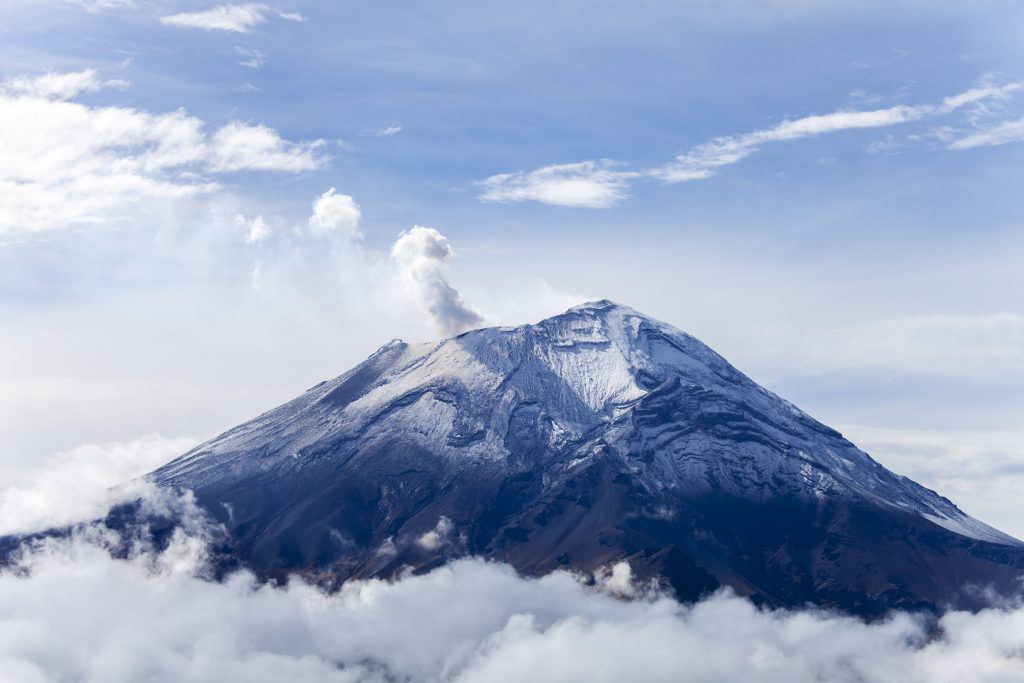
La Malinche
La Malinche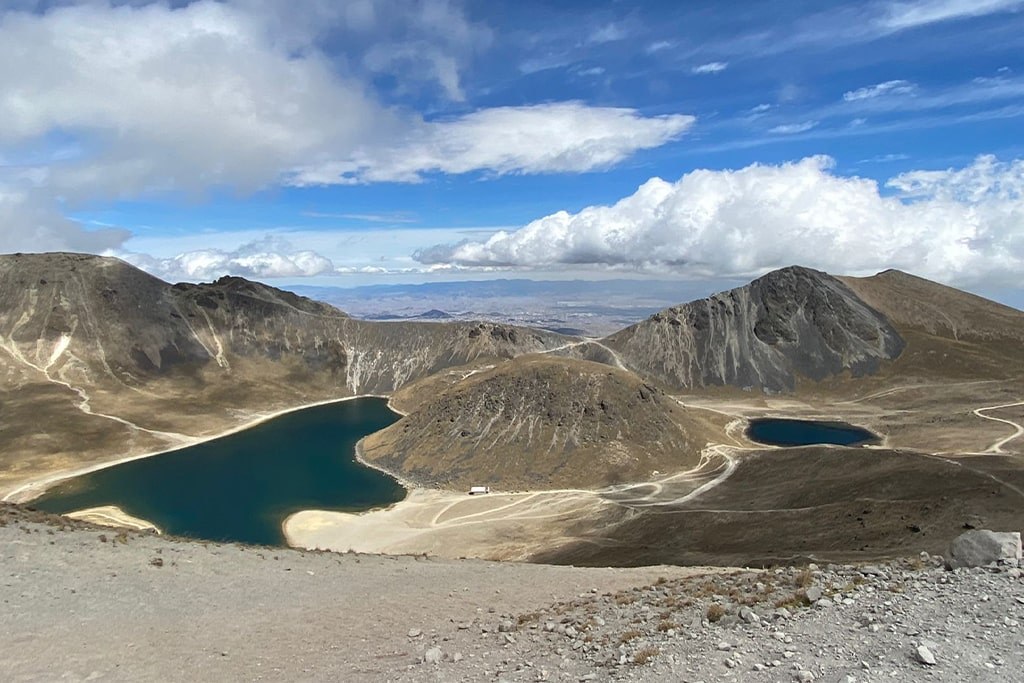
02 · Acclimatization option
Nevado de Toluca
Nevado de Toluca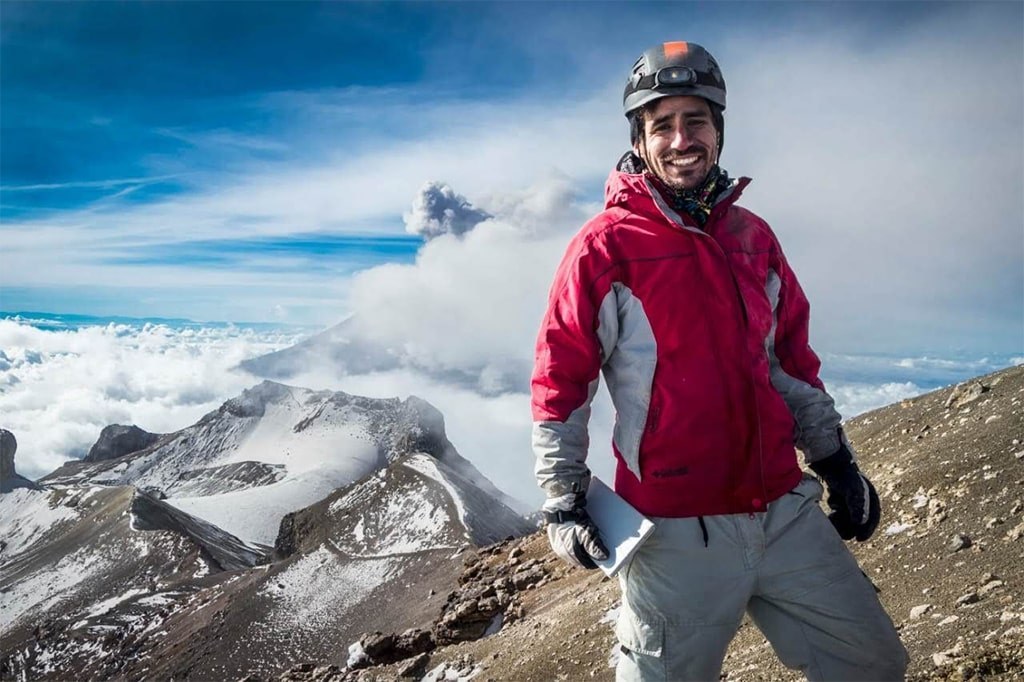
03 · Acclimatization option
Iztaccíhuatl
Iztaccíhuatl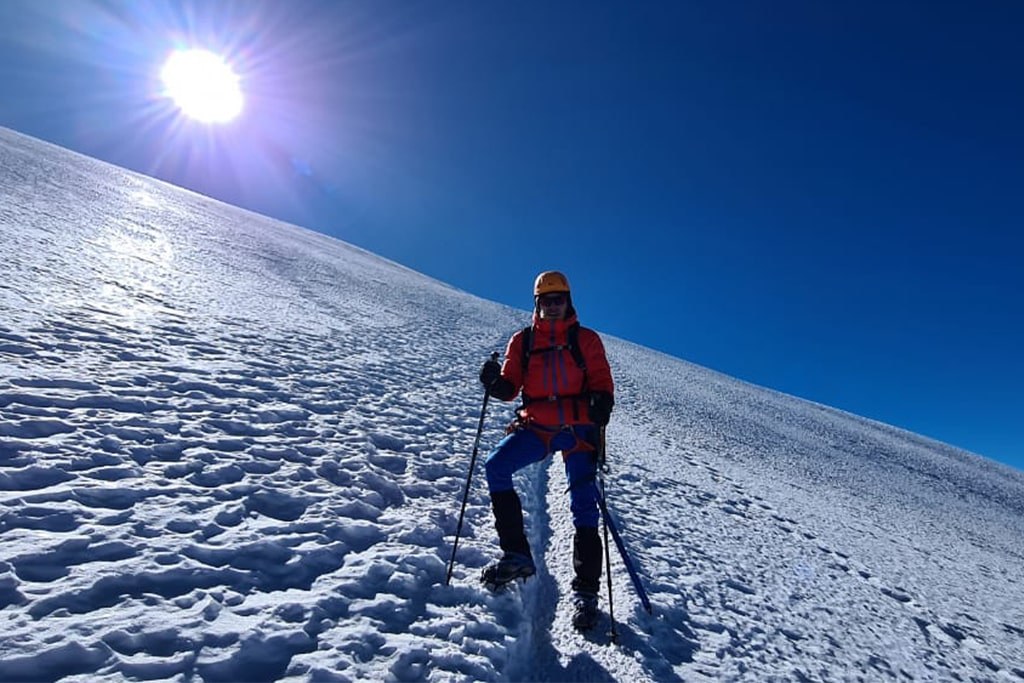
04 · This hike
Pico de Orizaba
You are here
Cold, wind and ice shape the climb.
The summit push starts in the coldest hours of the night. These are planning considerations, not a live forecast.
Deep cold
−5 °C to −15 °C on top before wind chill; the 01:00 start is the coldest hour.
Glacier conditions
Snow and ice change through the season; November–March is the most stable window.
Summit decisions
High winds, whiteout or extreme cold mean we delay or cancel the push — decided on site by your guide.
Trip details
The details, without the guesswork.
Private treks, available on request. Full trek details, inclusions, equipment recommendations, availability and a personalized quotation are provided upon request.
Pico de Orizaba may require different meeting, transfer and refuge arrangements. Tell us your preferred starting area; your written proposal confirms the logistics.
Your proposal defines services and booking arrangements. Reference route details are not confirmed inclusions.
- Dates & availability
- Request your dates; access, conditions and guide availability are checked for your route.
- Price & quote
- A personalized quote with total price and payment terms before booking.
- Group & guiding
- Guide profile and group-to-guide ratio are specified in the proposal.
- Transport & meeting point
- Pickup, transport and return are itemized in your proposal; a reference timetable is not a confirmed pickup.
- Inclusions & meals
- Only agreed, listed services are included. Your quote specifies guiding, access, meals, lodging and who supplies equipment.
- Booking & cancellation
- Payment, cancellation and weather-related changes are provided in writing before you commit.
A quote for your dates and your group.
Traveling solo, as a couple or with friends? Request your total trip cost with a clear breakdown of inclusions, equipment, payment terms and cancellation conditions. We quote the price for your group size.
No payment required to inquire.
Safety for this mountain
- Terrain & exposure
- Very high altitude, cold, exposed slopes and potential glacier, snow or ice terrain.
- Preparation
- Technical readiness and supervision must be assessed before booking. Rope, crampon and ice-axe skills are not assumed to be learned during the ascent.
Before departure
- Review personal acclimatization and report symptoms before going higher.
- Confirm assigned guide, supervision, communication and evacuation arrangements for this route.
- Check current access, weather, required equipment and insurance activity/altitude limits.
- Agree route-specific technical training, equipment compatibility and shelter arrangements.
Severe or worsening altitude symptoms: stop ascending, descend and seek urgent medical help. Confusion, inability to walk steadily or breathlessness at rest are emergencies. Do not leave the affected person alone; arrange assisted descent or evacuation if walking is unsafe.
FAQs
Before you head for the glacier.
Route references & photographs
Measurements and schedules are references, not a fixed operating itinerary. Your proposal specifies the route and services.
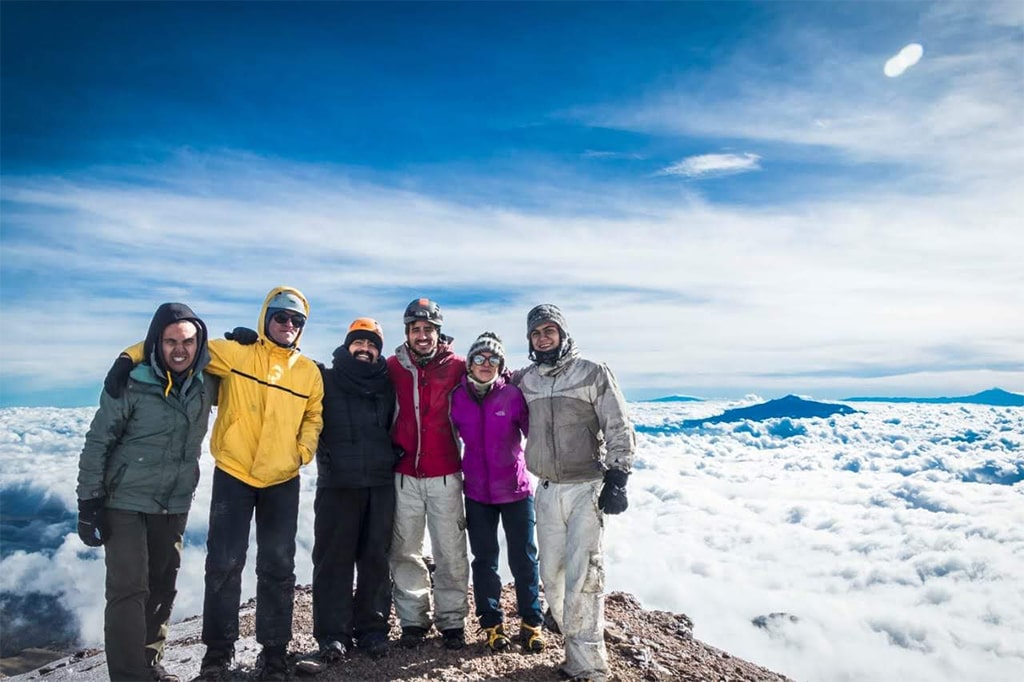
ON THE MOUNTAIN
Picture yourself at sunrise on the glacier.
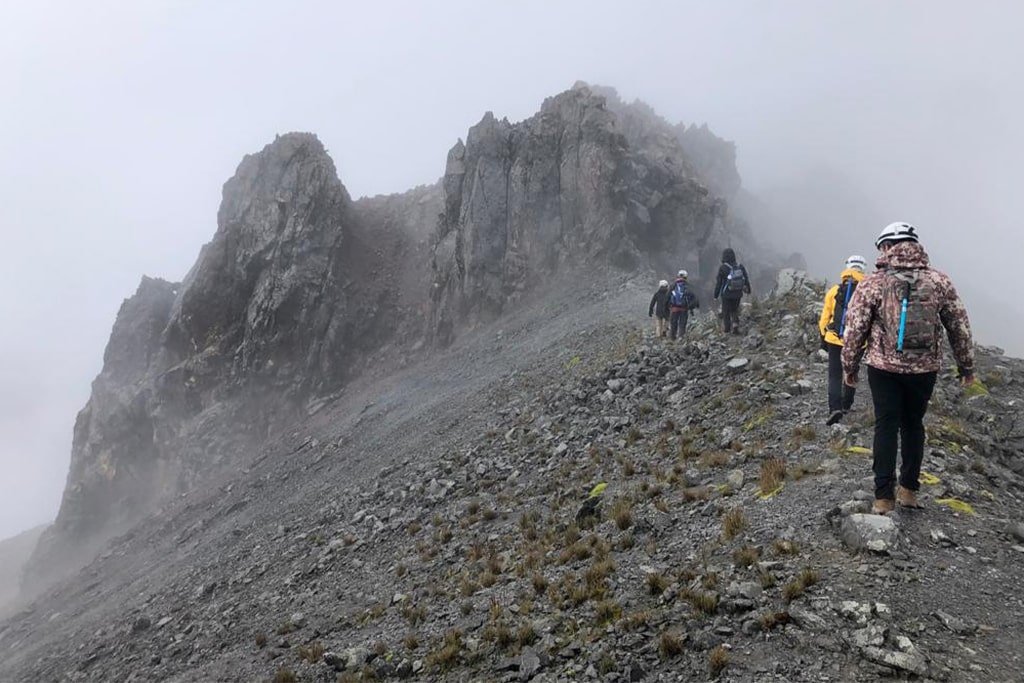
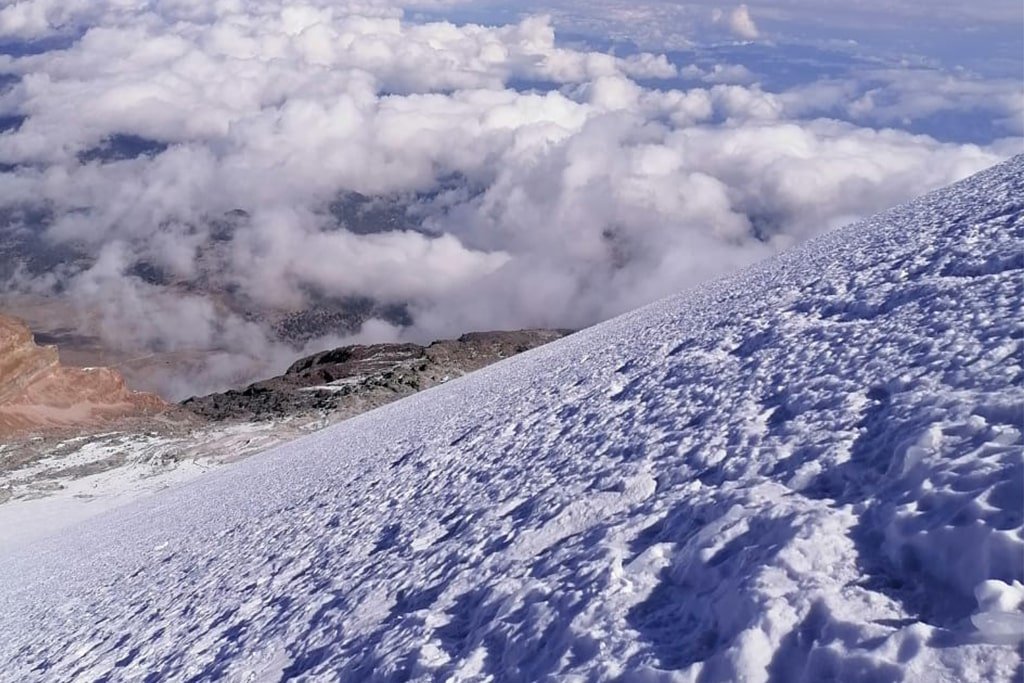
Real moments from Pico de Orizaba expeditions: the rope teams, the ice and the summit above the clouds.
Mountain photographs show past conditions, not current access, snow or weather.
Let’s plan your way to the top of Mexico.
Share your dates, group size and mountain experience. We’ll confirm availability, price and inclusions before you book.
No payment required to inquire.
Hiking stories from this trail
Story · 7 min read
Sunrise at the Top of Mexico: A Pico de Orizaba Expedition
A 01:00 wake-up at Piedra Grande, a rope team on the Jamapa glacier and first light at 5,636 meters.
Read the story →
Guide · 5 min read
How to Acclimatize for Mexico’s Volcanoes: The Altitude Ladder
The proven sequence from Mexico City to Pico de Orizaba — which peaks to climb, in what order, and how many rest days you need.
Read the story →
Guide · 4 min read
What to Pack for Mexico’s Volcanoes
From a day on Nevado de Toluca to a glacier on Pico de Orizaba: the layers, boots and small items that make the difference.
Read the story →
Guide · 4 min read
The Best Time of Year to Hike Mexico’s Volcanoes
Dry season, rainy season and glacier season: when to go for clear views, stable snow and safer summit days.
Read the story →
Build up to the top of Mexico.
Add an acclimatization climb before your Pico de Orizaba attempt.
IntermediateTlaxcala / Puebla
La Malinche Summit
A classic acclimatization peak: pine forest giving way to open alpine slopes.
Private departure · on request
Request Full Trek Details →AdvancedState of Mexico / Puebla
Iztaccíhuatl Summit
A demanding high-mountain journey along the ridgeline of the 'Sleeping Woman', for well-prepared hikers.
Private departure · on request
Request Full Trek Details →Pico de Orizaba Summit
Private departure · on request